
Are You Facing These Common Problems with LED Night Lights?
Struggling with a night light that flickers or dies too soon? These small issues can ruin your sleep and waste your money. Let's fix these annoying lighting headaches right now.
Common LED night light problems1 include flickering2, wrong brightness3, blue light interference4, and sensor failure5. Most issues stem from poor-quality drivers or cheap LEDs, but simple maintenance or choosing the right specs can solve them.
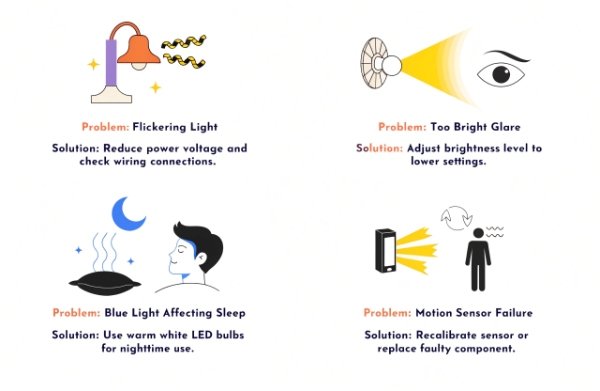
Common LED Night Light Problems
I have spent years sourcing lights for my brand, Chocolamp. I have seen every possible defect. In this guide, I will share my insider knowledge to help you identify and fix these issues easily.
Why is Your LED Night Light Flickering or Flashing?
Do you feel like your bedroom has turned into a disco at 2 AM? Constant flickering2 is irritating and can even cause eye strain or headaches during the night.
Flickering usually happens because of a faulty power driver or unstable voltage. If the internal components cannot handle the current, the LED chips will pulse rapidly instead of glowing steadily.
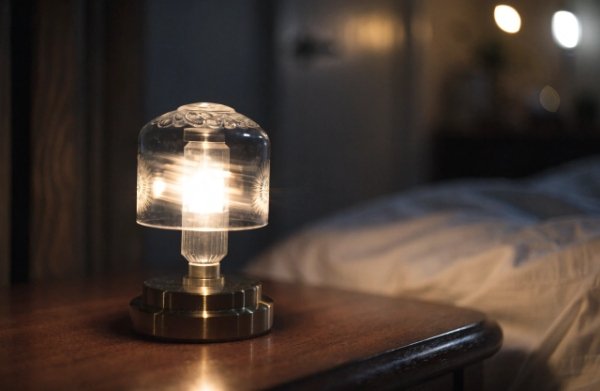
Flickering LED Issues
Understanding the Root Causes of Flickering
When I talk to my factory partners in China, we often focus on the "driver." The driver is like the brain of the LED. If the brain is cheap, the light suffers. Many low-cost lights use RC (Resistance-Capacitance) step-down circuits. These are very sensitive to fluctuations in your home's electricity. If your fridge kicks on, your night light might blink.
Another factor is the quality of the solder joints inside. In my experience, a loose wire can create an intermittent connection. This makes the light flash when there is even a tiny vibration. You should also check if your night light is on a circuit with a dimmer switch. Most basic LED night lights are not dimmable. Trying to dim them will lead to aggressive strobing.
| Cause | Impact | Solution |
|---|---|---|
| Low-Quality Driver | Short lifespan and constant pulse | Choose IC driver models |
| Voltage Spikes | Temporary flashing | Use a surge protector |
| Incompatible Dimmer | Rapid strobing | Use a standard ON/OFF outlet |
Is Your Night Light Too Bright or Causing Glare?
Does your night light feel like a flashlight hitting your eyes? Excessive brightness can wake you up completely when you just wanted to grab a glass of water.
Glare occurs when the light output is too high or the cover is too transparent. This disrupts your "sleep mode" and makes it hard for your eyes to adjust to the dark.
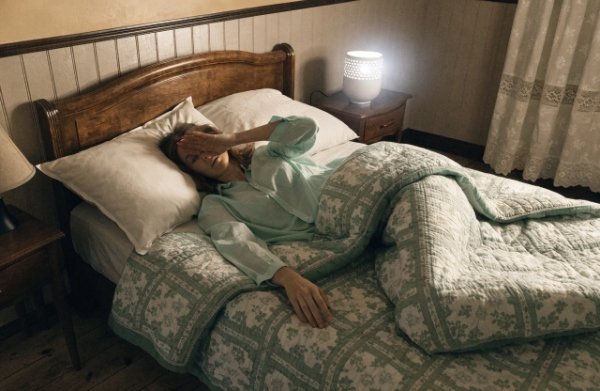
Brightness and Glare Issues
Balancing Lumens and Diffusion for Comfort
In the lighting industry, we measure "lumen" output. For a night light, you rarely need more than 10 to 20 lumens. If you buy a light that is 50 lumens, it is simply too much for a small bedroom. I always tell my clients in Brazil that the "frosted" or "milky" cover is better than a clear one. A clear cover shows the LED point source, which creates a sharp "stinging" light.
Think about the placement too. If the light is at eye level, the glare is worse. I prefer designs that aim the light downward toward the floor. This provides a safe path without hitting your retinas directly. If your current light is too bright, you can try a simple DIY fix like adding a piece of semi-transparent tape over the lens. However, it is always better to buy a light with a built-in light sensor that dims automatically based on the room's ambient light.
| Issue | Effect | Recommendation |
|---|---|---|
| High Lumens | Disrupts Melatonin | Stay under 15 lumens |
| Clear Lens | Sharp Glare | Use Frosted/Opal covers |
| Bad Positioning | Direct Eye Contact | Aim light towards the floor |
Why Does Blue Light from LEDs Affect Your Sleep?
Are you feeling tired but unable to fall asleep after looking at your night light? The color of your light might be secretly "tricking" your brain into thinking it is daytime.
Blue light suppresses melatonin, the hormone that helps you sleep. Many standard white LEDs have a high blue content, which keeps your brain alert and ruins your rest cycle.
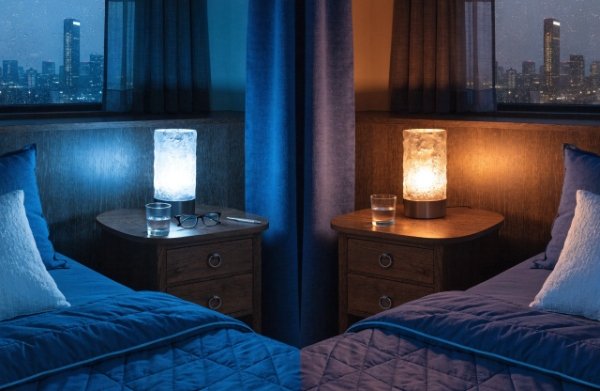
Color Temperature and Blue Light
The Science of Color Temperature (K)
When you look at the back of a package, look for the "K" rating. This stands for Kelvin. A high number like 5000K or 6000K is "Cool White." It looks blue and crisp. This is great for an office but terrible for a bedroom. For my Chocolamp products, I push for 3000K or even 2700K. This is "Warm White," which looks more like a candle or an old light bulb.
Blue light pollution is a real problem in modern homes. Our screens already give us too much blue light. Your night light should be your "safe zone." I have seen some manufacturers use "Amber" LEDs. These have almost zero blue light. If you are buying lights for a child's room, this is very important. Children are even more sensitive to light-induced sleep disruption than adults are. Switching to a warm orange or yellow glow can make a huge difference in how quickly they fall asleep.
| Light Color | Kelvin (K) | Best Use Case |
|---|---|---|
| Cool White | 5000K - 6500K | Garage or Hallway |
| Warm White | 2700K - 3000K | Bedrooms |
| Amber/Orange | <2000K | Baby Nurseries |
Is Your Motion Sensor Failing to Trigger?
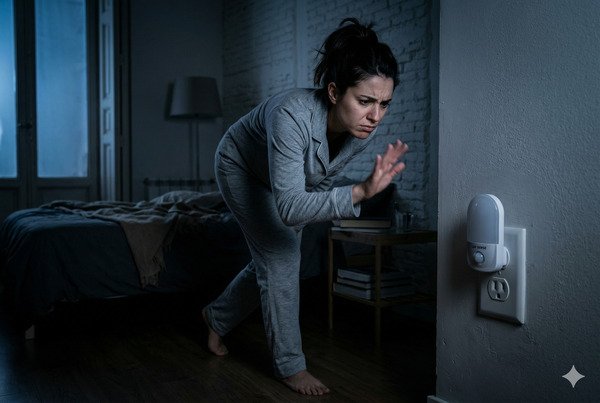
Do you find yourself waving your arms like a crazy person just to get the light to turn on? It is very frustrating when a "smart" light acts dumb.
Sensor failure happens due to blocked lenses, high ambient heat, or poor sensor quality. If the PIR (Passive Infrared) sensor cannot detect a heat change, the light stays dark.
 Motion Sensor Failures
How to Fix and Maintain PIR Sensors
Motion sensors work by detecting infrared heat from your body. If you place the night light behind a plant or a piece of furniture, the sensor is "blind." Also, if the room is very hot (close to 37°C or 98°F), the sensor might struggle to tell the difference between you and the air. This is a common complaint I hear from my customers in warmer climates like Brazil.
Dust is another enemy. A thin layer of dust on the sensor lens can scatter the infrared signals. I always suggest wiping the sensor with a dry cloth once a month. Sometimes, the "Auto" mode gets stuck. I usually tell people to unplug the light for 30 seconds to "reset" the internal chip. If it still doesn't work, the PIR component might be dead. This happens often in very cheap models where the sensor is not shielded from power surges.
| Symptom | Possible Cause | Fix |
|---|---|---|
| No Trigger | Blocked View | Clear the path |
| Always On | Heat Source Nearby | Move away from vents |
| Short Range | Dirty Lens | Wipe with microfiber |
Why Do Some LED Night Lights Fail Prematurely?
Did your "long-lasting" LED die after only a few months? Even though LEDs are supposed to last for years, many cheap units end up in the trash way too soon.
Premature failure is usually caused by "overdriving" the LEDs. To make a light look brighter, some makers push too much current through the chip, causing it to overheat and burn out.
Heat: The Secret Killer of LEDs
People think LEDs don't get hot, but the tiny chip inside generates heat. If the plastic housing doesn't have enough space or the circuit design is poor, that heat stays trapped. This kills the LED. I have visited factories where they save 5 cents by using a thinner circuit board. That 5 cents costs the consumer months of life from the product.
In my business, we check the "current" settings. A stable current means the LED runs cool and lasts the promised 20,000 or 50,000 hours. Another issue is "integrated" LEDs. Most night lights have the LED soldered directly to the board. If one tiny part fails, you have to throw the whole thing away. This is why I focus on sourcing from partners who use high-quality capacitors. The capacitor is usually the first thing to pop, not the LED itself.
| Component | Role | Failure Result |
|---|---|---|
| LED Chip | Light Source | Dimming or Dead |
| Capacitor | Energy Storage | Light won't turn on |
| Solder Joint | Connection | Intermittent light |
Conclusion
Understanding these common LED problems helps you choose better products and save money. Always prioritize warm color temperatures and high-quality drivers for the best experience.
Lily Chen sales@chocolamp.com
www.chocolamp.com
-
Explore this resource to understand the typical issues with LED night lights and how to address them. ↩
-
Learn about the causes of flickering in LED night lights and how to fix them effectively. ↩ ↩
-
Discover solutions for adjusting brightness levels in LED night lights for better comfort. ↩
-
Understand the impact of blue light on sleep and find ways to mitigate its effects. ↩
-
Find out the reasons behind sensor failures and how to troubleshoot them. ↩

