
You stare at your screen for hours. Your eyes feel tired and dry. You get headaches at night. Many people face these problems every day.
Warm white LEDs between 2700K and 3000K1 are the best choice for your eyes in 2026. They reduce eye strain, protect sleep, and lower the risk of long-term damage. Cool white lights with high blue light cause more problems than they solve.
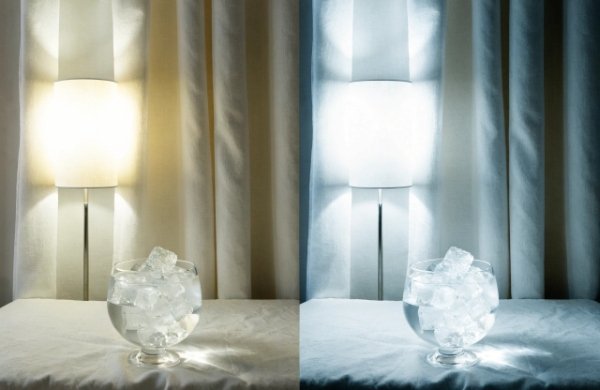 Comparison of different LED [light colors](https://pmc.ncbi.nlm.nih.gov/articles/PMC9752890/)2 showing warm vs cool tones
I see this issue all the time when I talk with buyers. Many wholesalers still order cool white lights because they look bright at first. But their customers complain later about tired eyes and poor sleep. Let me show you what really works and why it matters for your business and your health.
Why the Wrong LED Light Color Is Ruining Your Eyes, Sleep, and Productivity?
You work late under bright lights. Then you struggle to fall asleep. Your eyes feel sore the next day. This cycle hurts many people who use LEDs daily.
Cool white LEDs above 5000K3 contain too much blue light. This causes digital eye strain4, headaches, dry eyes, and disrupts your sleep by blocking melatonin5. Warm white and amber options protect you from these issues.
 Person rubbing tired eyes while working under harsh blue light
The Hidden Cost of Cool White Lights
I remember when I first started at Chocolamp. One of our clients in Greece kept ordering high Kelvin cool white night lights6 for their retail shelves. Sales looked good at first. But after three months, stores reported many returns. Customers said the lights made their kids' eyes tired and affected bedtime routines.
Cool white lights feel strong and clear in the store. But they push too much blue light into your eyes. Your brain thinks it is still daytime. This makes it harder to relax at night. Studies show high blue light exposure7 links to sleep problems and even long-term eye risks like macular degeneration8.
How It Affects Productivity
Harsh cool lighting also hurts your work. Your eyes work harder to focus. You get headaches faster. Focus drops after a few hours. Many office workers9 notice this but blame their screens instead of the room lights.
Warm white lights solve this. They give enough brightness for tasks without the harsh glare10. I always recommend testing both types side by side. Most people feel the difference right away.
Real Impact on Daily Life
Think about children doing homework. Or adults reading before bed. The wrong light color makes these simple activities tiring. Over time, this adds up to real discomfort.
At Chocolamp, we test many color options in our factories. We see clear patterns. Lights with lower color temperatures create less fatigue during long use. This is why we focus on warm tones11 for our night lights6 and decorative lamps.
The Truth About LED Colors: Which Ones Actually Harm Your Eyes and Which Protect Them?
You hear mixed opinions about blue light. Some say it is fine. Others warn it damages eyes. You wonder what to believe in 2026.
High blue light from cool white LEDs harms your eyes and sleep. Warm white (2700K–3000K) and amber LEDs12 protect your eyes by reducing blue light exposure7. They lower strain and support natural body rhythms.
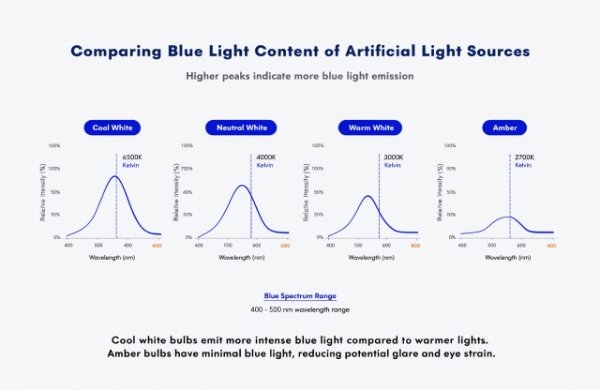 Spectrum chart comparing blue light in different LED colors
Breaking Down Common Myths
Many buyers think brighter equals better. They choose 5000K or higher lights for home use. But science shows the opposite for long hours. The human eye handles warm light better over time.
I once spoke with Luciana from Brazil. She imported cool white table lamps for her chain stores. Her customers loved the modern look. Yet many returned them after weeks. They reported eye fatigue and trouble sleeping. She switched to our warm white options and saw returns drop sharply.
Science Behind the Colors
Blue light sits at the high energy end of the visible spectrum. It scatters easily in the eye. This creates glare and forces eye muscles to work harder. Over months and years, this stress adds up.
Warm white LEDs cut blue light significantly. Amber and red-toned options cut it even more. They help keep your circadian rhythm13 stable. Your body produces melatonin5 naturally at night.
Quick Comparison Table
| LED Color Type | Kelvin Range | Blue Light Level | Best For | Eye Comfort Level |
|---|---|---|---|---|
| Cool White | 5000K+ | Very High | Short daytime tasks | Low |
| Neutral White | 4000K-5000K | High | General office use | Medium |
| Warm White | 2700K-3000K | Low | Reading, evening, kids | High |
| Amber / Red | Below 2000K | Almost None | Night use, sleep | Very High |
This table helps many of our wholesale partners14 choose faster. They see the data clearly and match products to customer needs.
Long-Term Risks
Researchers link too much blue light to higher chances of macular degeneration8. It also affects sleep quality for millions of people. In 2026, more studies confirm these connections.
At Chocolamp, we only recommend colors that support eye health. Our night lights6 come in warm white and gentle amber. We help buyers avoid the common trap of choosing looks over comfort.
How to Choose the Best LED Light Color for Your Eyes – A Simple 2026 Guide?
You want simple steps to pick the right lights. You do not want to read complicated science papers. You need clear advice that works today.
Follow this easy guide: Choose 2700K to 3000K warm white for most home and office use. Pick amber for bedtime. Test lights in real conditions. Always check for low blue light claims and proper certifications.
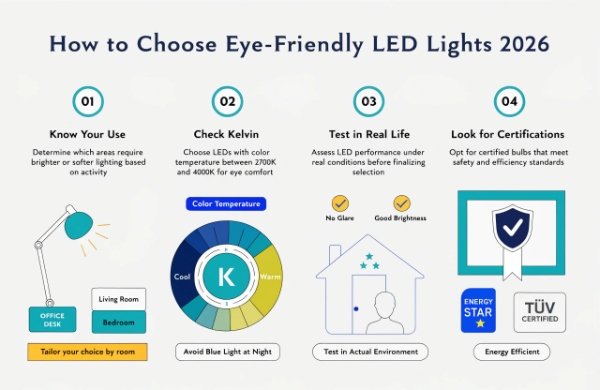 Step-by-step guide infographic for choosing LED color temperature
Step 1: Know Your Main Use
First, think about when and how you use the light. For evening reading or kids' rooms, warm white works best. For very late night use, amber gives extra protection.
I help many clients from Poland and Spain with this choice. They sell to families who want safe lights for children. We guide them to select warm tones11 that feel cozy yet bright enough for homework.
Step 2: Check Color Temperature
Look for Kelvin numbers15 on product specs. Stay between 2700K and 3500K for daily tasks. Avoid anything above 5000K for prolonged use.
Step 3: Test in Real Life
Order samples if possible. Place them in the actual room. Use them for a few evenings. Notice how your eyes feel after two hours. Most people pick warmer options after testing.
Step 4: Look for Quality Marks
Choose lights with CE and RoHS certification16. These ensure safety and proper performance. At Chocolamp, all our products meet these standards.
Step 5: Consider the Whole Space
Mix light colors2 if needed. Use warmer lights in bedrooms and living areas. Keep slightly brighter options for workspaces if tasks need more clarity.
Many small importers in Mexico and India use this guide. They mix our warm white night lights6 with other products. Their customers report better satisfaction and fewer complaints.
Why Warm White and Specific Amber LEDs Are the Clear Winner for Eye Health?
You see many LED options on the market. You wonder why some stand out for eye health. You want proof that certain colors really make a difference.
Warm white LEDs at 2700K–3000K and gentle amber LEDs12 win for eye health. They reduce strain, support sleep, improve focus, and lower long-term risks. They work with your eyes instead of against them.
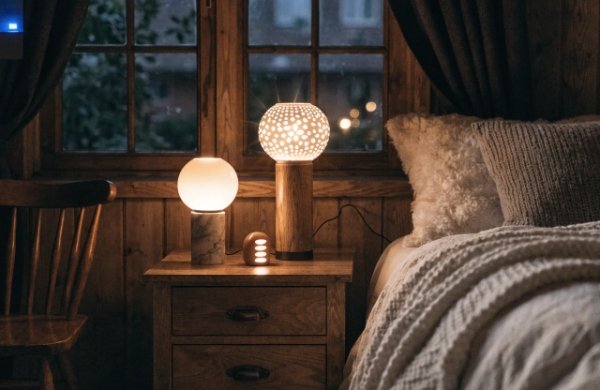 Warm white and amber [night lights](https://healthlighting.com/blogs/wellness/healthiest-light-for-eyes?srsltid=AfmBOoqqTKBRoIykImSR6yESadul5ClhBvJSKTEGELN9b8G4_KBsuMB0)6 in a cozy bedroom setting
Why Warm White Excels
Warm white gives a soft, inviting glow. It closely matches natural evening light. Your eyes relax under it. You can read or work longer without fatigue.
I personally use warm white lights at home now. After long days talking with international clients, my eyes feel much better compared to older cool white bulbs I used before.
The Extra Benefit of Amber
Amber LEDs take protection one step further. They remove almost all blue light. They help your body prepare for sleep. Many parents choose them for children's night lights6.
Our factories in Zhejiang and Guangdong produce both warm white and amber options. We see strong demand from European and South American buyers who want eye-friendly products.
Balance of Clarity and Comfort
Some people worry warm lights feel too dim. But modern LEDs solve this. They deliver good brightness while staying gentle. You get clear vision without the harshness.
Benefits Summary Table
| Benefit | Warm White (2700K-3000K) | Amber LEDs |
|---|---|---|
| Eye Strain Reduction | High | Very High |
| Sleep Support | Good | Excellent |
| Reading Comfort | Excellent | Good for bedtime |
| Daily Work Suitability | Very Good | Not ideal |
| Long-term Eye Protection | Strong | Strongest |
This table helps our partners explain value to their retail customers. It turns technical details into clear benefits.
At Chocolamp, we specialize in these eye-friendly designs17. Our night lights6 and decorative lamps use exactly these color temperatures. We help wholesalers build strong private label lines with products customers actually love long-term.
Ready to Protect Your Eyes? Find the Right LED Lighting Solution Today
You now know which LED colors help your eyes. You understand the risks of wrong choices. You want reliable suppliers who deliver quality.
Contact us today for warm white and amber LED night lights6 that protect eyes and support better sleep. We offer flexible orders, custom packaging, and fast delivery for your business.
I work every day to help buyers like you solve lighting problems. Whether you need bulk night lights6 for Europe or mixed orders for the Middle East, we make the process easy.
Conclusion
Choose warm white and amber LEDs12 to protect your eyes and improve daily comfort. The right light makes a real difference in 2026.
FAQ
Which LED light color is truly best for eye health?
Warm white LEDs (2700K–3000K) and amber LEDs12 are the best choices. They reduce blue light, lower eye strain, and support natural sleep patterns.
Is blue light from LEDs really harmful to the eyes?
Yes, high amounts of blue light from cool white LEDs can cause eye strain, headaches, and sleep disruption. Long-term exposure links to higher risks of eye problems.
What color temperature (Kelvin) is safest for reading and working?
2700K to 3500K warm white offers the safest balance. It provides clear vision with minimal eye fatigue for extended use.
Can warm white LEDs help reduce eye strain and headaches?
Yes, they reduce strain and headaches significantly compared to cool white lights. Many users notice the difference within days.
Are amber or red LEDs better than warm white for evening use?
Amber LEDs work better for late evening and bedtime. They have almost no blue light and help preserve your sleep cycle more effectively.
How do I choose eye-friendly LED lights for home or office?
Select lower Kelvin numbers15 (under 3500K), check for certifications, test in real conditions, and choose trusted suppliers like Chocolamp for quality and support.
-
Discover how warm white LEDs can reduce eye strain and improve sleep quality. ↩
-
Discover how light colors can influence your mood and work efficiency. ↩ ↩
-
Learn why cool white LEDs may harm your eyes and disrupt your sleep. ↩
-
Explore effective strategies to prevent digital eye strain from screen use. ↩
-
Understand the relationship between blue light exposure and melatonin levels. ↩ ↩
-
Explore the best night light options that promote better sleep and eye health. ↩ ↩ ↩ ↩ ↩ ↩ ↩ ↩ ↩
-
Explore the potential health risks associated with excessive blue light. ↩ ↩
-
Find out how blue light can impact long-term eye health. ↩ ↩
-
Find practical tips for office workers to minimize eye strain from lighting. ↩
-
Learn how to choose lighting that minimizes glare and enhances comfort. ↩
-
Learn how warm tones can improve comfort and reduce eye fatigue. ↩ ↩
-
Discover how amber LEDs can enhance your sleep quality and eye comfort. ↩ ↩ ↩ ↩
-
Learn how different LED colors can support or disrupt your natural body clock. ↩
-
Get insights on how to select the best LED products for your customers. ↩
-
Get insights into how Kelvin ratings affect light quality and eye comfort. ↩ ↩
-
Understand the importance of safety certifications in LED lighting. ↩
-
Explore the features that make LED designs beneficial for eye health. ↩

