
I know an unchanged reorder price can feel reassuring. But if important order details go unchecked, that familiar price can leave buyers with unexpected costs or delivery problems.
When I review a night light reorder, I reconfirm the product specification, packaging, quantity, quotation scope, price validity and delivery schedule. An unchanged price should apply to clearly agreed conditions. It does not prove that production costs have stayed the same or guarantee the same price for future orders.
In my work at Chocolamp, I sometimes choose to maintain a previous price even when costs have increased. I make that decision after reviewing the order and the customer relationship. One customer’s second and third orders show how this support can work. I use that experience here to explain what I check, what buyers should confirm and where the limits need to be clear.
Why Does an Unchanged Price Not Mean Nothing Has Changed?
I understand why buyers compare the latest quotation with the previous invoice. But that comparison alone can hide changes that affect the cost of supplying the order.
I may maintain a repeat-order price even when some costs have increased. My decision can reflect unchanged order conditions, the margin I can absorb and the customer’s long-term potential. I treat the price as a decision for an agreed order, rather than evidence that every cost has remained stable.
I separate the selling price from the cost behind it
I look at more than the final unit price when I review a reorder. Materials, purchased components, packaging and production arrangements can all affect the cost of supplying the same night light.
I do not assume that every cost changes at the same time. I also do not treat a general report about higher costs as proof that a particular order needs a higher price. I need to consider what affects that specific product and purchase order.
| What I review | Why it matters to my pricing decision |
|---|---|
| Product configuration | I need to know whether the previous production basis still applies. |
| Packaging requirements | I check whether the buyer expects the same materials and printing. |
| Order quantity | I assess whether the previous quantity basis remains suitable. |
| Available margin | I consider how much cost pressure I can reasonably absorb. |
| Customer relationship | I assess whether continued support makes commercial sense. |
I decide what support the order can carry
I want customers to see me as a stable supplier. I do not want every increase in my costs to become immediate pressure on their next purchase order.
But I still need to make a workable decision. If I maintain a price, I may accept a lower margin on that order. I need enough room to do that while meeting the agreed product and service requirements.
I therefore encourage buyers to ask what the maintained price covers. That question gives both sides a clearer basis for approval than simply asking whether the number is the same.
Which Repeat-Order Details Do Buyers Often Forget to Reconfirm?
I often see how convenient “same as last order” can be. But that short instruction can leave room for different assumptions about the product, packaging or shipment.
Before I accept “same as last order,” I want both sides to identify the reference order and reconfirm the model, functions, colors, accessories, packaging, quantity, trade terms and delivery schedule. I also check whether later emails or artwork revisions changed any part of the original agreement.
I use a specific order as the reference
I prefer a purchase order number or an approved specification sheet to a general reference to “the previous shipment.”
A customer may have bought more than one model. A model may have been supplied in different colors. Packaging artwork may also have changed after the first quotation.
I need to know which version the buyer wants to repeat. I then compare the new request with that version.
| Detail I compare | Question I want answered |
|---|---|
| Model and function | Are we repeating the same product and control method? |
| Electrical specification | Are the voltage, plug and other agreed requirements unchanged? |
| Colors and accessories | Are the selected versions and included items the same? |
| Retail packaging | Are we using the same approved artwork and materials? |
| Carton arrangement | Are the packing quantity and shipping marks unchanged? |
| Commercial terms | Are we quoting on the same delivery and payment basis? |
I check small changes before they become production instructions
I do not treat every revision as a reason to increase the price. Some changes may have little effect. Others may require new materials, extra preparation or a different production arrangement.
For example, I would review a request to add an accessory or change a retail box before confirming the old price. I would also review a smaller quantity rather than assume the previous unit cost still applies.
I ask buyers to list changes clearly, even when they seem minor. That gives me a chance to confirm the price and timing before those changes become part of the production order.
Why Did I Maintain Pricing on a Real Night Light Reorder?
I faced this decision when a customer reordered cartoon night lights in 2026. Higher costs created pressure, but raising the price was not my only option.
I maintained the original price for this customer’s second order in April 2026 and third order in May. The product configuration, quantity and packaging remained unchanged. I accepted a lower margin because I saw long-term potential and wanted to support the customer’s continued promotion of the products.
I built the relationship before the first purchase order
I first established contact with this customer in 2024. I supported the selection process with product options, quotations, samples, images and videos.
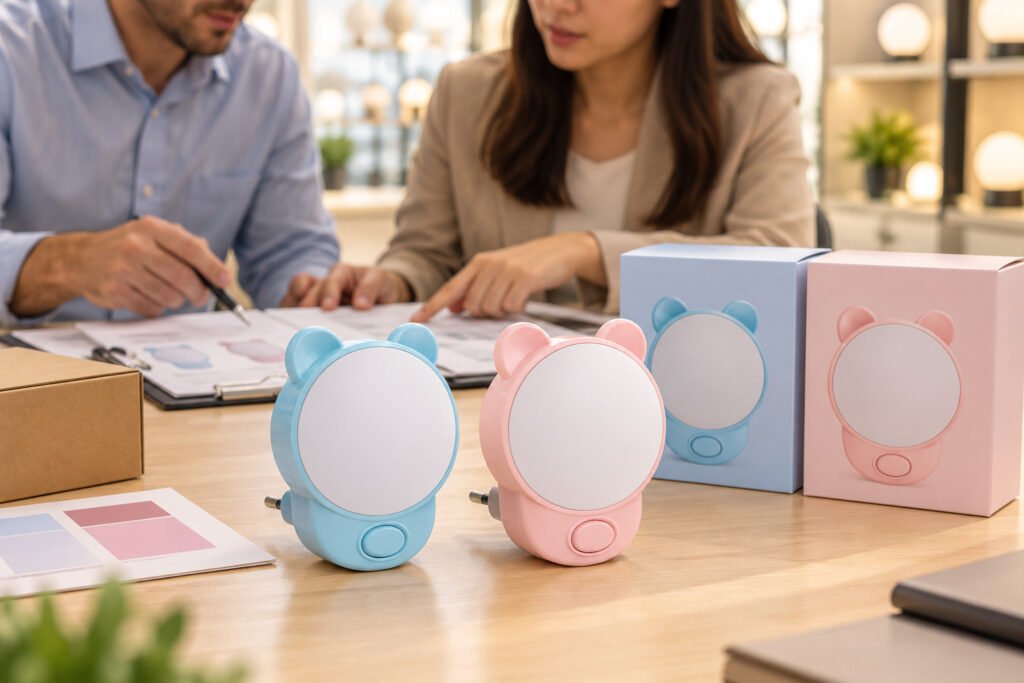
The customer placed the first order in September 2025. The order included blue and pink cartoon switch night lights.
I see that early support as part of helping a buyer evaluate a product properly. A quotation gives the price, but samples and visual materials help the buyer understand what they are considering for their range.
I reviewed the second and third orders separately
I received the second order in April 2026. At that point, I faced cost increases, but the product configuration, order quantity and packaging requirements remained unchanged.
I chose to maintain the original price. The second order shipped in May.
I received the third order in May, and I kept the same pricing basis for that order as well. The third order shipped in July.
| Order | When the customer placed it | Shipment timing | My pricing decision |
|---|---|---|---|
| First order | September 2025 | Not covered in this case | I established the original price. |
| Second order | April 2026 | May 2026 | I maintained the original price. |
| Third order | May 2026 | July 2026 | I maintained the same pricing basis. |
I supported the relationship without assuming the outcome
I wanted to give the customer a stable purchasing basis while they continued promoting the products. I considered the account worth supporting, and I accepted some reduction in margin.
I can say that our cooperation continued. I cannot say that maintaining the price caused the third order. The order history does not establish the customer’s reason for buying again.
I also do not present this decision as a permanent price promise. I made it for these orders under the conditions we had agreed.
What Should Buyers Check Before Approving a Repeat-Order Quotation?
I know buyers want to approve familiar products quickly. But an approval based only on the unit price can leave important costs and responsibilities unclear.
I recommend checking six areas before approving a repeat-order quotation: product specification, packaging, quantity, quotation scope, price validity and delivery arrangements. I use the previous approved order as a reference, then confirm any changes in writing so both sides can work from the same instructions.
I connect the quotation to the actual purchase order
I want the buyer to be able to match the quotation with the product they expect to receive. A familiar model number helps, but it does not describe every part of the order.
I use the following checklist to make the review more practical.
| Checkpoint | What I recommend the buyer confirm |
|---|---|
| Product specification | Are the model, functions, colors, electrical requirements and accessories unchanged? |
| Packaging | Are the retail packaging, artwork, printing requirements and carton configuration the same? |
| Order quantity | What quantity supports the maintained price, and does a quantity change need a new review? |
| Quotation scope | Which products, packaging costs and trade terms does the quoted price include? |
| Validity period | Does the price cover one purchase order or orders placed within an agreed period? |
| Delivery arrangement | What is the agreed lead time, and which approvals must be completed before production? |
I check the quotation basis before comparing totals
I would not compare two prices fairly without checking their trade terms and included costs.
For example, I would ask for clarification if the old quotation used FOB terms and the new request involved a different delivery arrangement. I would also check whether the new price includes the same packaging and accessories.
I want the buyer to understand what they are approving, including any costs shown separately from the unit price.
I reconfirm timing even when the product is unchanged
I do not assume that a repeat order will follow the previous production schedule automatically. I still need to confirm the current arrangement and any outstanding approvals.
If packaging artwork needs approval, I want that step identified before we agree on the schedule. If the buyer has a required shipment date, I need that date early enough to assess it.
I find that a clear approval record helps both sides manage the order. It gives the buyer a usable purchasing reference and gives me a defined production brief.
How Do I Define the Scope of Repeat-Order Price Support?
I can support a customer more confidently when the conditions are clear. An open-ended promise makes later discussions harder, especially when the next order changes.
I define price support by the purchase order, quantity, product configuration, packaging and commercial terms it covers. I also confirm its validity and delivery basis. If a later order changes those conditions, I review the quotation again before confirming production.
I state what the maintained price applies to
I prefer a short written confirmation that connects the price to a specific order. I do not need complicated language, but I do need enough detail to prevent different expectations.
For a suitable order, I might write:
“I can maintain the previous unit price for this purchase order, based on the confirmed quantity and unchanged product specification and packaging. I will review any requested changes before confirming their effect on price and delivery.”
I would add the actual order reference, trade terms and any agreed validity date where needed.
| Scope item | What I make clear |
|---|---|
| Purchase order | I identify the order covered by the decision. |
| Quantity | I state the quantity on which I based the price. |
| Product and packaging | I identify the approved specification and packaging version. |
| Commercial terms | I confirm the agreed payment and trade terms. |
| Validity | I state the applicable order or agreed acceptance period. |
| Later changes | I explain when another quotation review is needed. |
I review changes before making another promise
I may be able to maintain the price when a buyer changes something. But I need to assess that change first.
A lower quantity, an added function, a new box or a different shipment arrangement can affect the calculation. I do not assume the effect will always be large. I also do not promise that it will always be zero.
I want customers to feel comfortable asking for support. Clear conditions help me give an honest answer and explain what I can offer for the order in front of us.
Frequently Asked Questions
Why Might I Maintain the Same Price on a Repeat Order?
I may absorb some cost pressure when the order remains manageable and I see value in supporting the relationship. I still review the specification, packaging, quantity and terms before confirming that decision.
Do I Automatically Apply the Original Price to Every Future Reorder?
I do not treat a previous price as an automatic commitment for every future order. I review the new request and confirm which price applies before production.
Which Product Details Do I Ask Buyers to Reconfirm?
I ask buyers to reconfirm the model, functions, electrical requirements, colors and accessories. I also check the approved packaging and carton arrangement so that “same product” has a clear meaning.
Can a Quantity Change Affect the Price I Offer?
I review quantity changes because they can affect how I spread production and packaging costs across the order. I confirm the actual effect rather than assume the old unit price still applies.
Will Customized Packaging Change My Repeat-Order Price?
I check whether the buyer is repeating the approved packaging or requesting a revision. I review new materials, printing or box requirements before confirming whether the price can stay the same.
How Do I Confirm the Validity of Price Support?
I connect the support to a specific purchase order or an agreed period. I also identify the quantity, specification, packaging and terms that form the basis of my confirmation.
Conclusion
I support stable reorder pricing when I can. I make that support practical by confirming specifications, packaging, quantity, terms and delivery before each order moves into production.

