
You lie in bed with lights on. You want to feel relaxed. Yet you toss and turn for hours and wake up tired. This happens to many people every night.
Red and amber LED lights are the best colors for sleep in 2026. They contain almost no blue light, protect melatonin production, and help you fall asleep faster with deeper rest. Warm white (2700K–3000K) works well too, while cool white and blue lights harm sleep.
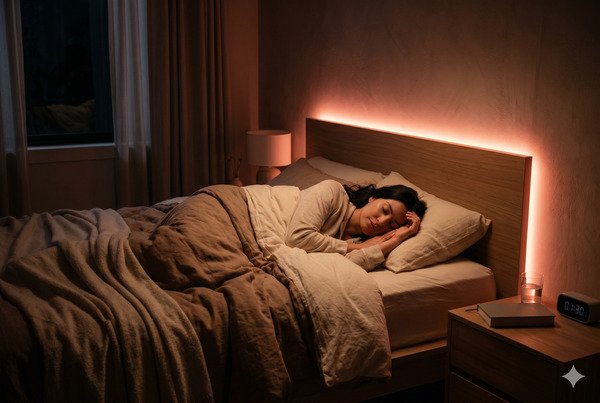 Person sleeping peacefully under warm red LED light
I hear this complaint often from buyers across Europe and South America. Many wholesalers still sell bright white LED strips and night lights because they look modern. But customers return them after weeks of poor sleep. Let me show you what really works based on science and real customer feedback.
Why the Wrong LED Light Color Is Ruining Your Sleep Every Night?
You use white or bright LED lights at night. You think they create a calm mood. But you wake up feeling exhausted and unfocused.
Cool white and blue-rich LED lights ruin your sleep. They suppress melatonin, delay sleep onset, reduce deep sleep, and leave you tired with eye strain and morning grogginess.
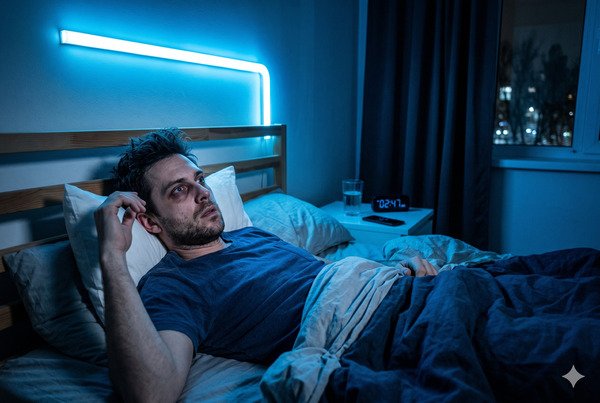 Tired man in bed unable to sleep with blue LED lights
How Blue Light Affects Your Body
I once helped a client in Poland who sold standard cool white night lights. His retail partners reported many customer complaints about restless sleep. We tested warmer options together and saw big improvements.
Blue light tells your brain it is still daytime. This blocks the hormone needed for sleep. Even small amounts at night can keep you awake longer.
Daily Consequences
People take longer to fall asleep. They wake up more often. The next day they feel low energy and irritable. Over time this affects mood and health.
Here is what happens with the wrong colors:
- Strong melatonin suppression
- Shorter deep sleep time
- Increased eye fatigue
- Morning tiredness
- Harder to focus
At Chocolamp we test every color in our factories. Lower color temperatures clearly perform better for bedtime use. Many buyers from Brazil and Greece now prefer our sleep-friendly lines.
Read our earlier guide: Which LED Light Color Is Best for Your Eyes in 2026.
Common LED Color Myths That Keep People Awake
You hear different opinions online. Some say any light is fine if it is dim. Others claim bright white helps relaxation. These myths hurt sleep.
Many myths exist about LED colors. “Brighter is better,” “white light is harmless,” and “red is too dark” are all incorrect. In reality, red, amber, and warm white support sleep far better than cool white.
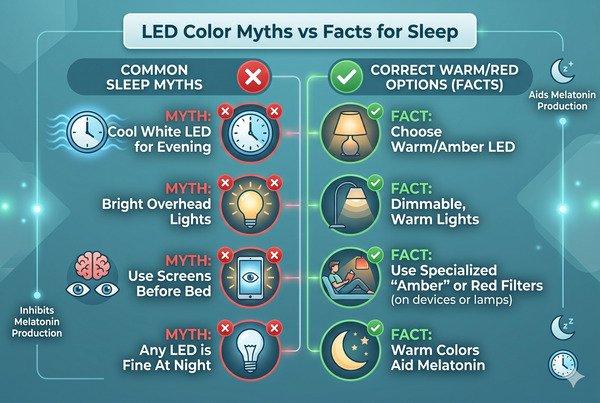 Common LED myths infographic with check and cross marks
Busting the Biggest Myths
One retailer in Spain told me his customers believed brighter lights helped them feel safe. After they switched to amber, they slept much better and bought again.
Myth 1: Brighter lights help you sleep.
Reality: High brightness with blue content keeps you alert.
Myth 2: White light is neutral.
Reality: Cool white contains strong blue wavelengths.
Myth 3: Red light is useless.
Reality: Red has almost zero blue light and supports melatonin best.
Quick Comparison Table
| LED Color | Blue Light Level | Melatonin Impact | Sleep Quality | Best Time to Use |
|---|---|---|---|---|
| Cool White / Blue | Very High | Strong suppression | Poor | Daytime only |
| Neutral White | High | Moderate suppression | Average | Early evening |
| Warm White | Low | Minimal | Good | Evening & night |
| Amber / Red | Almost None | Very low | Excellent | Bedtime & overnight |
This table helps our wholesale partners explain choices to stores quickly.
Many importers in Mexico and Turkey now avoid these myths. They choose our warm and red options for better customer satisfaction. Explore our full range at www.chocolamp.com.
How to Choose the Best LED Light Color for Sleep – A Simple 2026 Guide
You want clear steps to pick the right lights. You need advice that works in real bedrooms.
Choose red or amber for best sleep results. Use warm white (2700K–3000K) for general evening tasks. Keep brightness very low and add timers. Always check for low blue light performance.
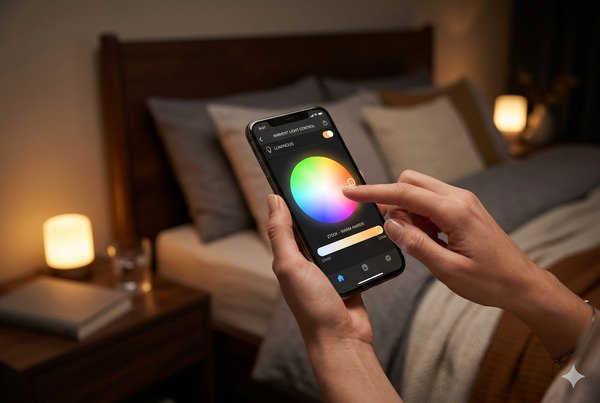 Hand choosing LED color temperature on phone app
Easy Steps to Follow
First, check Kelvin numbers. Stay below 3000K. I always suggest clients from Russia and Bulgaria start with samples.
Second, pick red or amber for bedside use.
Third, set brightness under 10-20%.
Fourth, use timers to turn lights off after you sleep.
Fifth, position lights indirectly so they do not shine directly at your eyes.
Many small buyers in Uzbekistan follow this guide. They mix our products into orders and receive positive store feedback.
For custom packaging and branding options, visit our OEM customization services.
The Best Sleep-Friendly LED Colors and Why They Work
You want to know exactly which colors help most. You need proof they make a difference.
Red and amber LEDs work best for sleep. They have almost no blue light and protect melatonin. Warm white (2700K–3000K) is the next best choice for evening activities.
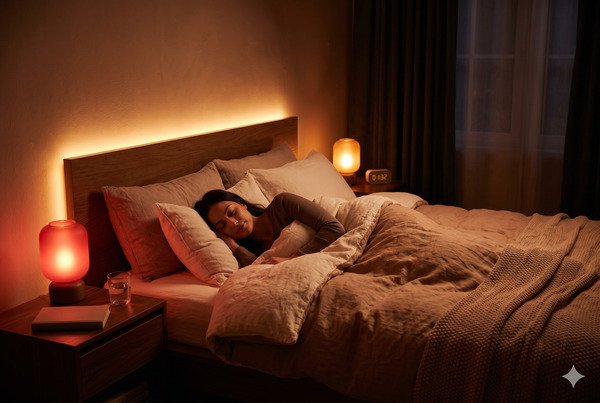 Cozy bedroom at night with soft red and amber LED lights creating a sleep-friendly atmosphereCozy bedroom with red and amber LED night lights
Why Red and Amber Excel
Red light has the lowest impact on your body clock. Amber follows closely. Both help you fall asleep naturally and stay asleep longer.
I use dim red strips in my own bedroom. After long days helping international clients, I notice faster sleep and better mornings.
Warm White as a Strong Option
Warm white gives enough light for reading while still supporting sleep. It works well for families who need some visibility.
Key benefits include:
- Faster sleep onset
- Higher melatonin levels
- Deeper rest stages
- Less morning fatigue
- Reduced eye strain
Our factories in Zhejiang and Guangdong focus on these exact colors. Wholesalers in Poland and Romania love them for private label night lights.
See all our sleep-friendly options here: www.chocolamp.com/night-lights.
Ready to Upgrade Your Nighttime Lighting for Better Sleep?
You now know which colors help and which harm. You want reliable products that improve rest.
Contact us today for red, amber, and warm white LED lights designed for better sleep. We provide flexible orders, custom packaging, and fast delivery to your market.
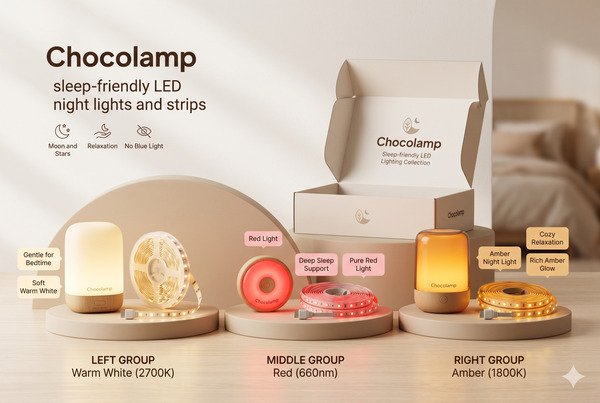 Chocolamp sleep-friendly LED night lights collection
I work daily with buyers like you. Whether you need bulk night lights for Europe or mixed orders, we make the process easy. Check our wholesale lighting solutions for details.
Conclusion
The color of your LED lights at night has a direct and powerful impact on your sleep quality. Blue and cool white lights suppress melatonin and keep your brain alert, while red, amber, and warm white lights (especially below 3000K) support your natural sleep cycle with minimal disruption.
In 2026, science is very clear: if you must keep lights on at night, choose the warmest, lowest-blue-light options possible — ideally dim red or amber. Small changes in lighting color can lead to noticeably better sleep, more energy, and improved overall health.
Don’t let poor lighting sabotage your rest. Make your bedroom lighting work with your body, not against it.
Shop Sleep-Friendly LED Lights – Warm & Red Tones
Download Free “Best LED Colors for Sleep” Guide 2026
Better sleep starts with better light tonight.
FAQ
What color LED light is best for sleep?
Red and amber LEDs are the best. They contain almost no blue light and support melatonin best. Warm white is the next good choice.
Is red light really better for sleep than other colors?
Yes. Red light has the least impact on your sleep hormones and helps you fall asleep faster and deeper.
Why does blue light from LEDs harm sleep?
Blue light suppresses melatonin production. It tricks your brain into thinking it is daytime and delays sleep.
What color temperature (Kelvin) is ideal for nighttime?
Below 3000K is ideal. The lower the Kelvin, the better for sleep, with red/amber being the most effective.
Can warm white lights be used for sleeping?
Yes. Warm white (2700K–3000K) works well for evening and light nighttime use with much less disruption than cool white.
How dim should LED lights be at night for good sleep?
Keep them very dim, under 10-20% brightness. Combine with timers for the best results.

